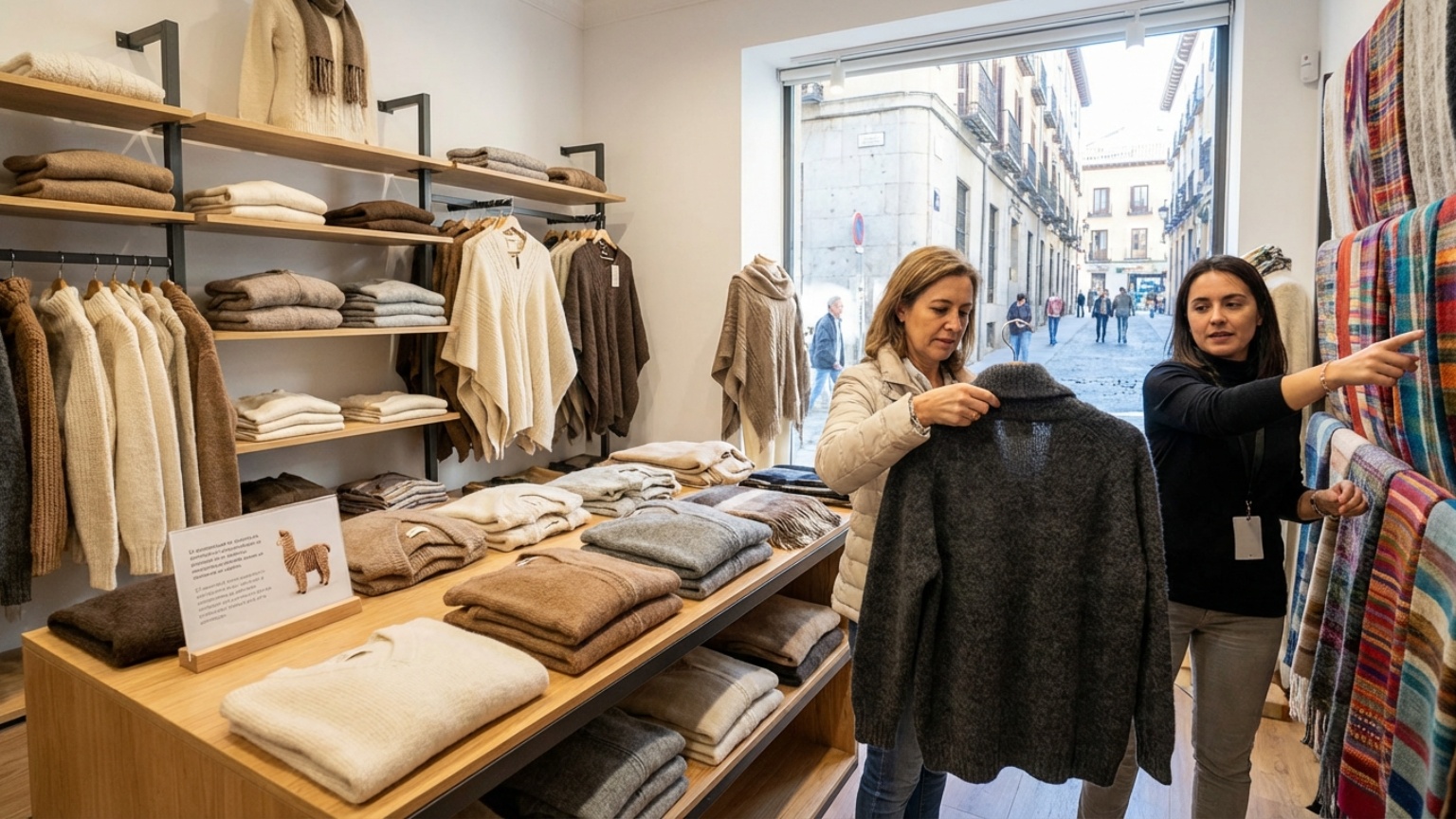
Many consumers look for high-quality alpaca clothing but struggle to find authentic items. Identifying genuine alpaca can be difficult, leading to uncertainty about material quality and origin. This guide helps clarify what makes alpaca special and where to find it.
1. What is alpaca clothing: its origin and unique qualities?
Alpaca clothing comes from the fleece of alpacas, animals native to the Andean mountains of South America. This natural fiber is known for its exceptional qualities, making it a highly valued material in the textile industry.
Garments made from alpaca wool offer both comfort and sophistication. People often seek these items for their unique feel and practical benefits.
- Origin: Alpaca animals thrive in the high altitudes of the Andes, particularly in Peru, Bolivia, and Chile. Their thick fleece protects them from harsh weather conditions in their natural habitat.
- Exceptional Warmth: Alpaca fiber has hollow core fibers, which trap air and provide superior insulation. This makes alpaca garments significantly warmer than sheep’s wool, often without the added bulk. For example, a thin alpaca sweater can provide as much warmth as a thicker wool one.
- Luxurious Softness: The fiber is incredibly soft and smooth to the touch, often compared to cashmere. It lacks the lanolin found in sheep’s wool, which means it does not cause the itchiness some people experience.
- Hypoallergenic Quality: Because alpaca fiber does not contain lanolin, it is naturally hypoallergenic. This makes it an excellent choice for individuals with sensitive skin or allergies to other wool types.
- Durability and Lightweight: Alpaca wool is strong, resilient, and less prone to pilling than many other natural fibers. Despite its strength and warmth, it remains remarkably light, offering comfort without weighing the wearer down.
These distinct characteristics establish alpaca clothing as a premium choice for many consumers. Its natural attributes provide both luxury and practical benefits for everyday wear.
2. Why the appeal of alpaca clothing continues to grow in Spain?
Alpaca clothing is becoming more popular in Spain. Consumers increasingly seek garments that offer both comfort and quality. This natural fiber provides unique benefits that align with modern preferences for sustainable and luxurious textiles. Its distinctive properties make it a favored choice for many.
- Exceptional Warmth and Lightness: Alpaca fiber is hollow, which traps air efficiently. This makes garments very warm without being heavy, ideal for Spain’s cooler regions or winter months in cities like Madrid.
- Luxurious Softness: Alpaca wool feels incredibly soft against the skin, often compared to cashmere. This gentle texture appeals to buyers looking for premium comfort in their everyday wear.
- Hypoallergenic Quality: Unlike sheep’s wool, alpaca fiber does not contain lanolin. This makes it a great choice for people with sensitive skin or allergies, broadening its appeal among Spanish consumers.
- Sustainability and Ethics: Alpaca farming has a low environmental impact because alpacas graze gently and do not harm pastures. Spanish consumers who prioritize ethical fashion choices find this aspect very appealing.
- Durability and Longevity: Alpaca fibers are strong and resistant to pilling, meaning clothes last longer. This provides good value for money, a key consideration for many shoppers in Spain.
These combined qualities explain why alpaca clothing is gaining significant traction across Spain. Its blend of practical benefits and ethical considerations meets a growing market demand.
3. How to identify authentic alpaca clothing when buying in Spain?
Identifying genuine alpaca clothing requires careful attention to specific details. Many products may contain alpaca blends. Knowing the distinct qualities of pure alpaca is important for consumers to ensure a genuine purchase ensure genuine purchase.
- Feel and texture: Authentic alpaca wool feels remarkably soft, smooth, and gentle against the skin. It lacks the itchiness sometimes found in other wool types.
- Label information: Always check the garment’s label for the fiber content. A label stating «100% Alpaca» or «Baby Alpaca» indicates purity, while labels listing other materials suggest a blend.
- Warmth without weight: Alpaca fiber is known for its exceptional thermal properties. It offers significant warmth without being heavy or bulky.
- Pilling resistance: While no wool is entirely pill-proof, pure alpaca naturally resists pilling much better than other fibers or blends. Examine the surface for minimal pilling, especially in areas of friction.
- Price point: Alpaca wool is a premium fiber, so its products usually carry a higher price. For example, an alpaca scarf priced at only 15 euros is highly unlikely to be 100% pure alpaca.
A thorough inspection of these features helps confirm the authenticity of alpaca clothing. Choosing reputable retailers also helps prevent buying counterfeit or mislabeled products.
4. Where to find quality alpaca clothing options in Spain?
Finding quality alpaca clothing in Spain requires knowing where to look for genuine products. Consumers can often find these items in specialized stores or through reputable online platforms.
These sources typically offer a range of garments made from authentic alpaca fiber. For example, a person visiting a major city like Madrid or Barcelona might find boutique shops selling imported alpaca wear.
- Specialty Boutiques: These shops often focus on natural fibers and imported goods. They provide a chance to feel the fabric and ensure quality before buying.
- Online Retailers: Many brands sell alpaca clothing directly through their websites. This option offers a wider selection and the convenience of shopping from home.
- Artisan Markets: Some local markets, especially those with international craft sections, may feature vendors selling handmade alpaca items. These pieces often show unique designs and craftsmanship.
- Fair Trade Shops: Stores dedicated to fair trade products sometimes stock clothing made from alpaca wool. These purchases support ethical production practices and artisan communities.
Exploring these options helps buyers locate high-quality alpaca garments in Spain. People can choose the best purchasing method based on their preferences for selection, convenience, or direct interaction.