Physical Address
304 North Cardinal St.
Dorchester Center, MA 02124
Physical Address
304 North Cardinal St.
Dorchester Center, MA 02124

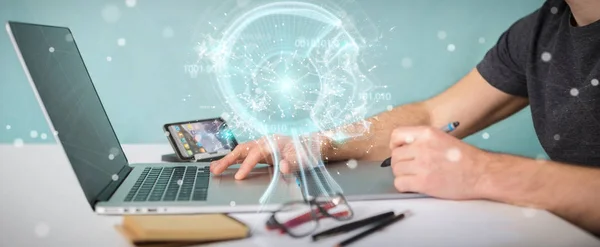
Artificial intelligence is no longer just a tool; it’s now a co-creator. Artists across the globe are embracing AI-powered programs to generate ideas, manipulate visuals, and even compose music. The creative process has evolved into a collaborative experience between human imagination and algorithmic precision.
Platforms like DALL·E, Midjourney, and Runway ML are empowering artists to test visual boundaries in seconds. These tools translate prompts into complex compositions, enabling exploration of abstract concepts that were once hard to visualize manually.
AI expands access to creativity. Designers, illustrators, and even hobbyists with limited technical skills can now create high-quality visual content. This democratization of design reduces production times and opens the field to broader perspectives.
This new dynamic accelerates content creation while maintaining high artistic value.
Yes, and they are gaining global traction. AI residencies, like those hosted by Ars Electronica or The Goethe-Institut, bring together artists, coders, and theorists to explore human-machine creativity. These spaces foster experimentation and critical thinking about the impact of algorithms on cultural narratives.
AI residencies provide technical mentoring, exhibitions, and collaborative learning. They are incubators for hybrid art forms where boundaries between science and creativity blur.
While AI enables innovative expression, it also raises concerns. Who owns the rights to an artwork created by an algorithm? How do we credit originality when machines learn from pre-existing data?
These questions are pushing for new intellectual property frameworks. Additionally, critics worry that reliance on algorithms may reduce artistic authenticity or homogenize visual culture. Regulation, transparency, and ethical guidelines will be essential moving forward.
By positioning AI as an extension, not a replacement. Artists who incorporate AI into their workflow often use it to enhance, not overshadow, their voice. The result is a layered form of expression where machine-generated input becomes part of a broader narrative.
Maintaining a unique signature in AI art is both possible and powerful.
The future points toward greater immersion. Virtual reality, interactive installations, and real-time AI responses are taking digital art to new experiential heights. Museums and galleries are beginning to embrace these hybrid works, rethinking curation and audience engagement.
Art is becoming increasingly performative and adaptive, responding to viewers’ actions or emotional states. This evolution blurs the line between spectator and co-creator, a trend expected to define exhibitions in coming years.
AI has not replaced artists, it has expanded what art can be. As technology and creativity converge, a new visual language is emerging, one that speaks to both the logic of code and the depth of human emotion.