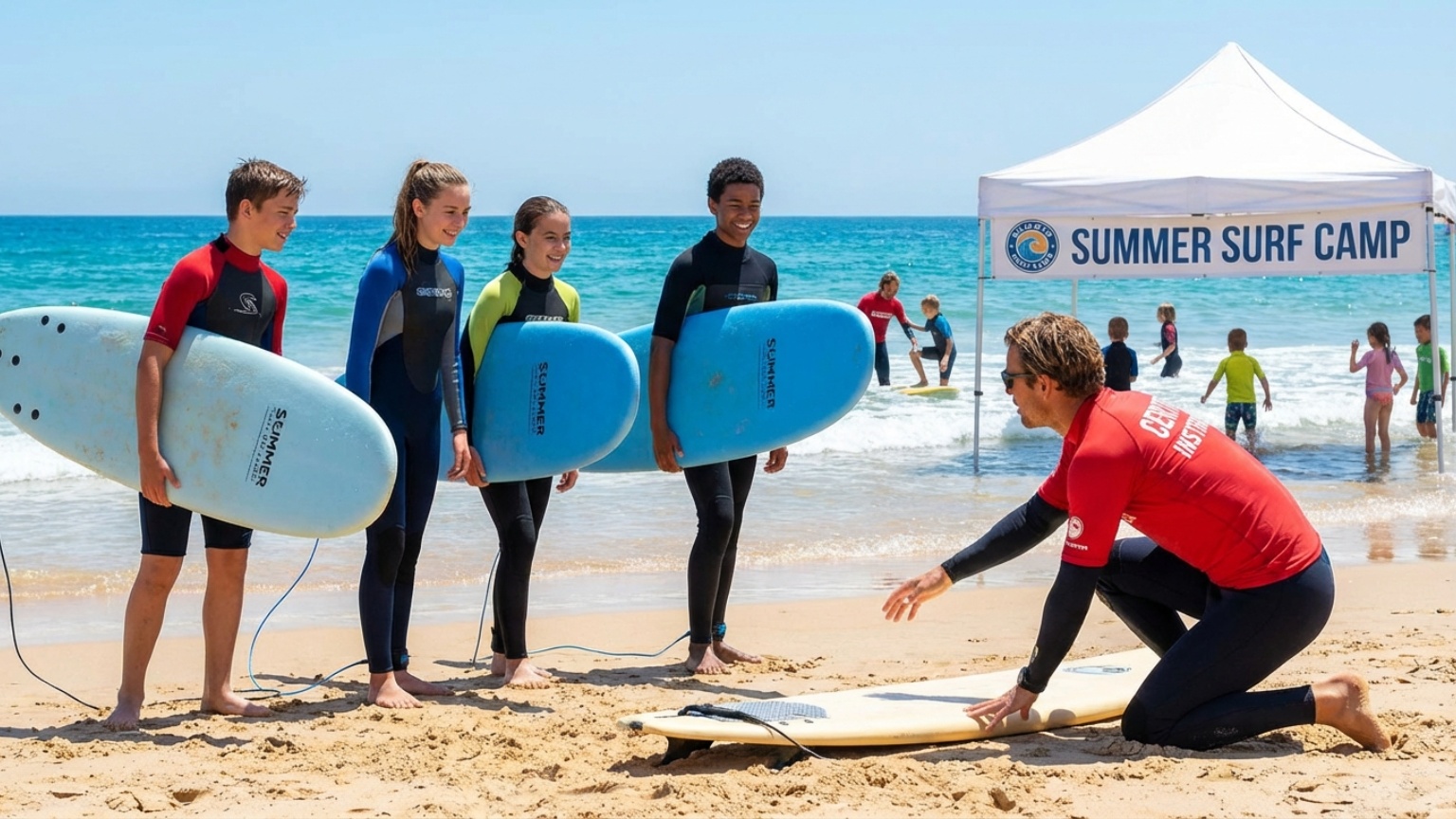
Finding engaging summer activities that keep children active and learning can be a challenge for parents. Many seek options balancing outdoor adventure with skill development. Summer surf camps offer a unique solution, providing young people a chance to learn surfing and connect with the ocean.
1. What are summer surf camps and their core activities?
Summer surf camps offer young people a structured environment to learn surfing and ocean safety. These camps combine professional instruction with engaging activities, creating a memorable summer experience.
They help participants build confidence and develop new physical skills. For instance, a child might start the week never having touched a surfboard and end it riding small waves independently.
- Surf Instruction: Participants receive daily lessons from certified instructors who teach fundamental surfing skills. They learn essential techniques such as paddling, standing up, and safely riding small waves.
- Ocean Safety: Campers learn about critical aspects of ocean safety, including identifying rip currents and understanding wave patterns. This knowledge is crucial for safely navigating the marine environment and respecting its power.
- Beach Games and Activities: Beyond surfing, camps often include various engaging beach activities like volleyball, frisbee, and sandcastle building contests. These games promote teamwork, social interaction, and a sense of community among participants.
- Environmental Education: Many camps integrate lessons on marine life and ocean conservation into their programs. This helps young people understand the importance of protecting coastal ecosystems and practicing responsible beach habits.
- Equipment Care: Young surfers learn how to properly handle, clean, and store their surfboards and wetsuits after each session. This teaches responsibility, extends the life of their gear, and prepares them for future independent surfing.
These core activities ensure participants gain valuable surfing skills and a deeper appreciation for the ocean. Summer surf camps provide a unique blend of physical activity, learning, and fun for young individuals.
2. Why the experience of summer surf camps matters for youth development?
Summer surf camps offer more than just surf lessons to young people. They provide a unique environment for children and teenagers to grow and develop important life skills. These camps help foster independence, build character, and teach valuable lessons through ocean sports. Young people learn about themselves and their abilities in a supportive, outdoor setting.
- Confidence Building: Catching a wave for the first time gives a child a significant sense of accomplishment. This success helps them believe in their own capabilities and encourages them to try new things outside their comfort zone.
- Physical Activity: Surfing is a full-body workout, promoting strength, balance, and coordination. Regular activity keeps young people healthy and teaches them the benefits of an active lifestyle away from screens.
- Social Connections: Campers work together, sharing waves and supporting each other in the water. For example, two campers might cheer each other on as they paddle out, creating a bond and making new friends.
- Resilience and Persistence: Learning to surf involves many falls and attempts before success. Young people learn to get back on the board after falling, which builds mental toughness and a «never give up» attitude.
- Respect for Nature: Being in the ocean teaches an appreciation for marine life and coastal environments. Campers learn about ocean safety, tides, and the importance of protecting natural resources for the future.
Overall, summer surf camps provide a rich environment for personal growth and skill development. Young people leave with new skills, stronger character, and lasting memories from their time by the sea.
3. How the daily structure of summer surf camps supports learning?
Summer surf camps offer a clear daily structure designed to help young people learn and grow. This routine provides a predictable environment, which is important for skill development and safety. The consistent schedule helps participants understand expectations and build confidence over time.
- Morning instruction: Each day begins with land-based lessons on surf theory and safety rules. For example, instructors teach about wave patterns, rip currents, and proper paddling techniques. This foundational knowledge prepares campers before they enter the ocean.
- Supervised water practice: After theory, campers move to the water for practical surfing sessions. Certified instructors work closely with small groups to help them catch waves and stand up. This direct application of skills is crucial for learning.
- Breaks and recovery: Camps include regular breaks for lunch and rest. These periods allow young surfers to re-energize and avoid fatigue. Rest ensures they remain focused and receptive to new information in later sessions.
- Skill refinement: Afternoon sessions often focus on improving specific techniques. Instructors might work on turning, balancing, or advanced paddling. This targeted practice helps participants solidify their abilities and progress quickly.
- Daily debrief and feedback: The day ends with a review of individual and group progress. Instructors provide constructive feedback and encouragement to each camper. This helps young people understand their achievements and areas for future growth.
This structured approach ensures a progressive learning experience for all participants. It allows young people to develop surfing skills safely and effectively while enjoying their time at the beach.
4. What to consider when selecting summer surf camps?
Selecting a summer surf camp for young people requires careful thought. Parents want a safe, fun, and educational experience for their children.
They often look for camps that balance learning new skills with an enjoyable atmosphere. For example, some parents might prioritize a camp known for its strong safety record over one that focuses only on advanced surfing techniques.
- Instructor experience and safety: Look for camps with certified instructors who have experience teaching young people. These instructors should know first aid and ocean safety protocols.
- Group size and attention: Smaller group sizes often mean more personal attention for each child. This can help children learn faster and feel safer in the water.
- Curriculum and activities: A good camp offers a structured curriculum that teaches surfing skills progressively. It should also include other engaging activities, like beach games or ocean awareness lessons.
- Location and facilities: Consider the camp’s location and its proximity to suitable surfing spots. Check if the facilities provide adequate shelter, changing areas, and equipment storage.
- Camp atmosphere: The camp should foster a positive and encouraging environment for all participants. A supportive atmosphere helps build confidence and friendships among young surfers.
Considering these points helps ensure a positive and memorable summer surf camp experience. A well-chosen camp provides both skill development and lasting memories for young surfers.