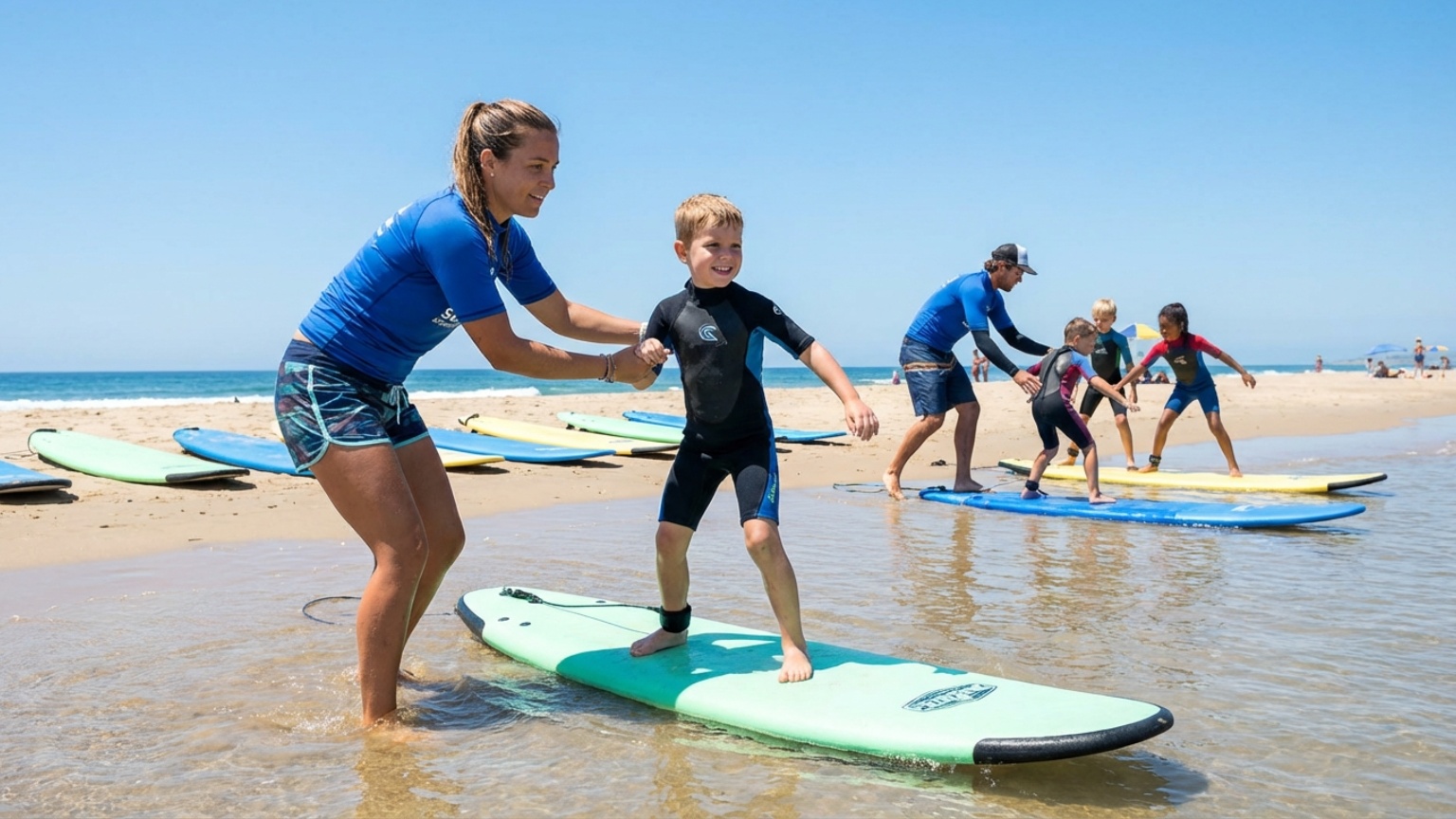
Parents often seek enriching summer activities that combine fun with skill development for their children. The idea of a surf camp can be exciting, but questions about safety, learning methods, and overall experience are common. Understanding what surf lessons for kids entail within a summer camp setting helps clarify these concerns.
1. What is the definition of surf lessons for kids at a summer camp?
Surf lessons for kids at a summer camp teach children how to surf in a structured and safe environment. These programs combine professional instruction with the fun of a summer camp experience.
Children learn fundamental surfing techniques, ocean safety, and wave dynamics from experienced instructors. The goal is to build confidence and develop surfing skills while enjoying the beach.
- Certified Instructors: Surf camps employ instructors who are certified in surfing instruction and often hold lifeguard and first-aid certifications. They guide children through each step, from paddling to standing on the board.
- Small Group Sizes: Lessons typically occur in small groups to ensure each child gets personalized attention and feedback. This allows instructors to closely monitor safety and skill development for every participant.
- Safety Protocols: Comprehensive safety measures are a core part of all lessons, including briefings on ocean conditions, rip currents, and proper board handling. For example, children learn how to fall safely and how to protect themselves and others in the water.
- Skill Progression: The curriculum is designed to gradually build skills, starting with basic balance and paddling on whitewater waves. As children improve, they advance to catching unbroken waves and learning turning techniques.
- Ocean Awareness: Beyond surfing, kids learn about the marine environment, weather patterns, and ocean etiquette. This understanding helps them become more responsible and knowledgeable water users.
Overall, these lessons offer more than just surfing instruction; they provide a comprehensive ocean experience. Kids gain new skills, make friends, and build a lasting connection with the ocean.
2. What are the benefits of surf lessons for kids in a summer camp setting?
Surf lessons in a summer camp setting offer many advantages for children. These programs provide a unique environment for physical, mental, and social development. Kids not only learn a new skill but also gain valuable life experiences. The combination of structured learning and a fun camp atmosphere makes these lessons highly beneficial.
- Physical fitness: Surfing demands core strength, balance, and endurance. Regular practice improves overall physical health and coordination; for example, paddling out through waves builds arm and shoulder strength.
- Increased confidence: Learning to surf involves overcoming challenges and fear. Catching a first wave gives a child a huge sense of accomplishment, which helps build self-esteem and a belief in their abilities.
- Ocean awareness and safety: Children learn about ocean currents, wave patterns, and marine life. Instructors teach them how to identify safe surfing conditions and respect the ocean, crucial knowledge for anyone spending time near the water.
- Social development: Summer camps bring children together from various backgrounds. Kids work in small groups during lessons, cheering each other on and making new friends, which fosters teamwork and communication skills.
- Connection with nature: Spending time in the ocean helps children appreciate the natural world. They experience the beauty of the beach and the power of the waves firsthand, leading to a greater sense of environmental responsibility.
Overall, surf lessons within a summer camp offer much more than just learning to ride waves. They provide a holistic experience that supports a child’s growth in many important areas.
3. What is the typical structure of surf lessons for kids at a summer surf camp?
Surf lessons for children at a summer camp follow a clear structure to ensure safety and effective learning. These programs introduce kids to surfing in a fun and supportive environment.
Instructors typically begin with basic concepts on land before moving into the water. For example, children often practice standing up on a board in the sand before entering the ocean.
- Safety Briefing and Beach Rules: Each lesson starts with essential safety information. Children learn about ocean conditions, rip currents, and how to use their equipment safely.
- Warm-up and Land Drills: Before entering the water, kids do a physical warm-up and practice key surfing movements. They learn paddling techniques and how to «pop up» on the board while on the sand.
- Water Practice with Guidance: Instructors then guide children into the shallow water to apply their land skills. Kids practice catching small foam waves and standing up with the instructor’s help.
- Ocean Awareness and Theory: Beyond riding waves, lessons include learning about the ocean environment. This covers understanding wave types, tides, and how to safely navigate different beach conditions.
- Review and Feedback: At the end of each session, instructors review what was learned and provide individual feedback. This helps children understand their progress and areas for improvement.
This structured approach helps children build confidence and develop foundational surfing skills. It also fosters a strong appreciation for ocean safety and the marine environment.
4. What factors influence the choice of surf lessons for kids’ summer camps?
Choosing surf lessons for kids’ summer camps involves several considerations for parents. They look for programs that prioritize safety, effective learning, and an enjoyable environment. These choices help ensure a memorable and beneficial experience for their children.
- Safety Measures and Instructor Qualifications: Parents deeply consider the camp’s safety protocols and the instructors’ certifications. For instance, a camp might highlight its low student-to-instructor ratio to show individual attention and better supervision, which is a key safety feature.
- Curriculum and Skill Development: The content of the surf program is important for skill building. Some camps focus on teaching basic paddling and ocean awareness, while others advance to specific wave riding techniques as children progress.
- Group Size and Personal Attention: Smaller group sizes often lead to more personalized coaching for each child. This can help children learn faster and gain confidence in the water because instructors can offer more direct feedback.
- Location and Facilities: The surf spot’s conditions and the camp’s amenities also influence choices. A camp located on a gentle beach with easy access and good changing facilities can be very appealing to parents and children alike.
- Cost and Value: The overall price and what the camp fee includes are key factors. Parents assess the value offered against the investment for their child’s summer activity, considering factors like equipment rental and extra activities.
By carefully evaluating these aspects, parents can select a surf camp that meets their child’s needs. This helps create a safe, educational, and enjoyable summer experience.