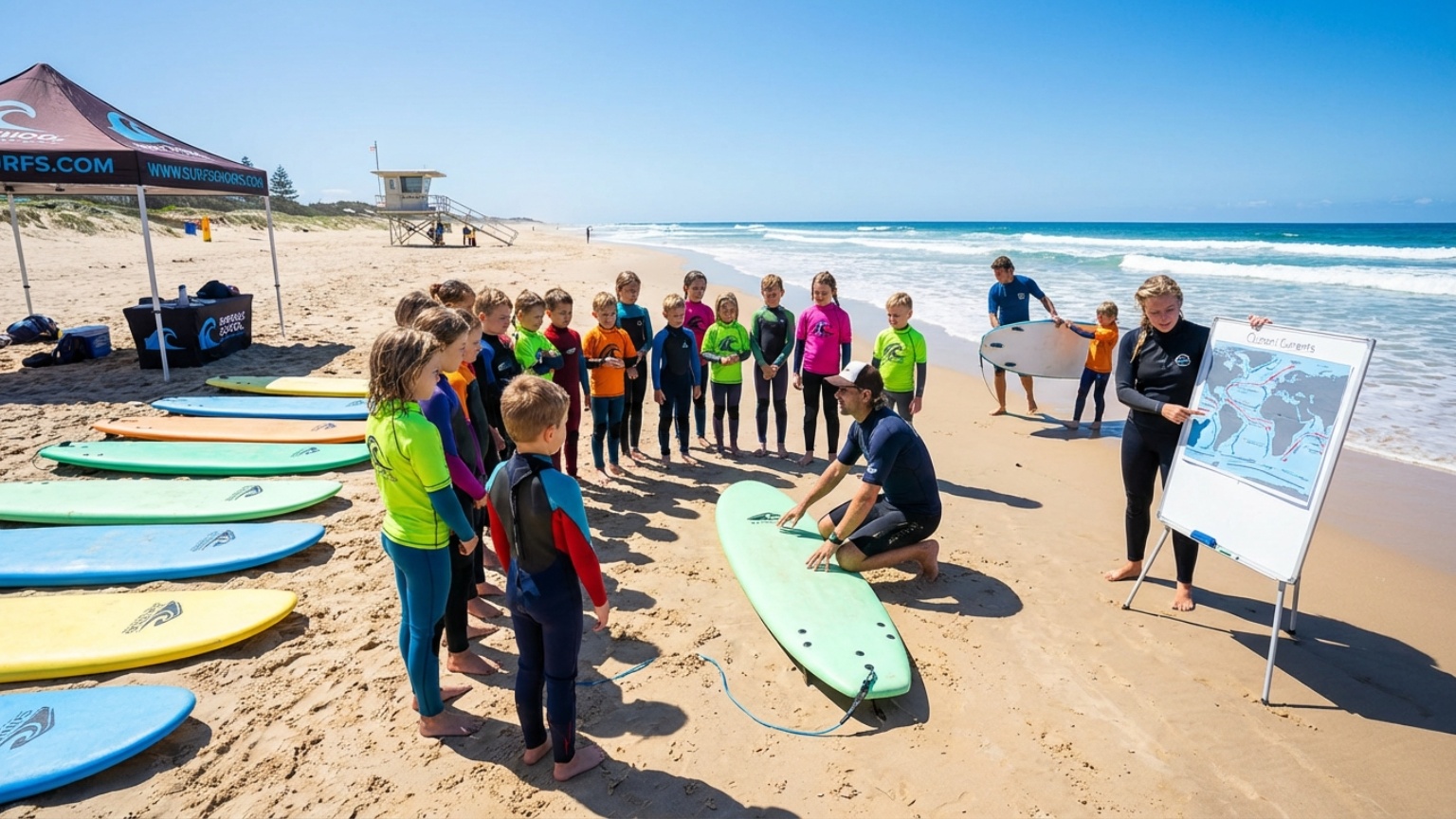
Finding engaging and safe summer activities for children can be challenging. Many parents seek options that combine physical activity with skill development and a connection to nature. A surf school for kids offers a unique solution, providing structured learning in an exciting ocean setting. This guide explores the value of such programs.
1. What is a surf school for kids and what is its structure?
A surf school for kids provides specialized instruction to young people learning to surf. These schools offer a safe and supportive environment where children develop ocean awareness and surfing skills.
They structure their programs to match different age groups and skill levels. For example, a beginner might learn about ocean safety before ever touching a surfboard.
- Safety Instruction: Schools prioritize teaching children about ocean currents, wave behavior, and proper equipment use. This ensures young surfers understand how to stay safe while enjoying the water.
- Fundamental Skills: Instructors teach basic surfing techniques, including paddling, standing up, and riding small waves. Children practice these skills in a controlled setting, building confidence with each attempt.
- Equipment Provision: Most schools provide all necessary gear, such as surfboards, wetsuits, and leashes. This means participants do not need to buy expensive equipment before starting lessons.
- Experienced Coaches: Certified instructors with experience teaching children lead the classes. They understand how to engage young learners and adapt their methods to individual needs.
- Structured Sessions: Programs often include warm-up exercises, on-land practice, and in-water instruction. This systematic approach helps children learn effectively and progress at their own pace.
These structured programs help children gain physical fitness and develop a connection with the ocean. Ultimately, a kids’ surf school offers a valuable learning experience beyond just catching waves.
2. Why is the choice of a surf school for kids a valuable investment?
- Professional Instruction and Safety: Certified instructors teach proper techniques and ocean safety rules. This helps children learn in a secure and supervised setting, reducing risks. For example, knowing how to handle currents or identify safe zones is crucial.
- Skill Development and Confidence: Learning to surf challenges children physically and mentally. Mastering a new skill, like catching a wave, greatly boosts their self-esteem. A child who once struggled might stand up for the first time, remembering that success for years.
- Physical Activity and Outdoor Engagement: Surf schools encourage active lifestyles away from screens. Children spend hours in the fresh air and ocean, improving their fitness and coordination. This promotes overall health and a love for the outdoors.
- Social Skills and Teamwork: Kids interact with peers and instructors in a group setting. They learn to support each other, share equipment, and celebrate successes together. This fosters friendships and important social skills.
- Ocean Awareness and Respect: Instructors often teach about marine life, ocean conservation, and beach etiquette. Children develop a deeper appreciation and respect for the natural environment. They learn the importance of caring for the ocean.
3. How does the selection of a surf school for kids ensure safe learning?
Choosing a surf school for children requires careful consideration of its safety measures. A reputable surf school prioritizes the well-being of its young students above all else.
This focus on safety ensures that children learn to surf in a secure and supportive environment. For example, parents often research a school’s safety record and instructor qualifications before enrollment.
- Certified Instructors: Instructors must hold current certifications in surf instruction, first aid, and cardiopulmonary resuscitation (CPR). These qualifications ensure they can teach proper techniques and handle any emergencies that may arise on the beach or in the water.
- Small Group Sizes: Limiting the number of students per instructor allows for closer supervision and more personalized attention. This close monitoring helps instructors track each child’s progress and quickly address any potential safety concerns.
- Appropriate Equipment: A quality surf school provides well-maintained surfboards and wetsuits that are suitable for children’s sizes and skill levels. Using the correct gear helps prevent injuries and makes the learning process more comfortable and effective.
- Safe Beach Conditions: Schools carefully select teaching locations with manageable waves and constantly monitor daily weather and ocean conditions. They also educate children about important ocean safety rules, such as how to identify rip currents or always stay within designated zones.
- Clear Safety Protocols: Established schools have detailed emergency action plans and teach students fundamental ocean safety rules. For instance, children learn to always stay near their assigned instructor and how to signal for help if needed.
These safety measures build confidence in young surfers as they develop new skills. A secure learning environment allows children to enjoy their time in the ocean and learn surfing effectively.
4. What aspects to consider when choosing a surf school for kids?
Choosing a surf school for children requires careful thought. Parents should evaluate several key aspects to ensure a safe and positive learning experience. Selecting the right school helps young people develop skills and confidence in the ocean. This choice impacts how much a child enjoys learning to surf enjoys learning surf.
- Safety Protocols and Instructor Credentials: Safety is the top priority for any children’s activity. Look for schools that have certified instructors, often with lifeguard training, and clear emergency plans. For example, a reliable school will explain how they manage varying ocean conditions and student-to-instructor ratios.
- Group Size and Personal Attention: Small group sizes allow instructors to give each child more individual guidance. This is important for new learners who need help with basic techniques, such as paddling and standing on the board. A good ratio means a child receives direct feedback during their lesson.
- Curriculum and Teaching Philosophy: A well-structured curriculum introduces surfing skills progressively, from water safety to wave riding. Consider if the school focuses on fun, skill development, or both. Understanding their teaching approach helps parents align it with their child’s learning style.
- Equipment Quality and Maintenance: Children need access to appropriate and well-maintained surfboards and wetsuits. Good equipment enhances safety and makes learning easier and more comfortable. For instance, soft-top boards are ideal for beginners because they are stable and reduce impact during falls.
- Reputation and Parent Feedback: Researching reviews and asking for testimonials provides insight into the school’s past performance. Other parents’ experiences can highlight strengths and weaknesses. This information helps confirm the school’s commitment to safety and effective instruction.
Considering these factors helps parents make an informed decision for their child. A well-chosen surf school provides a foundation for fun, skill, and lasting ocean memories.