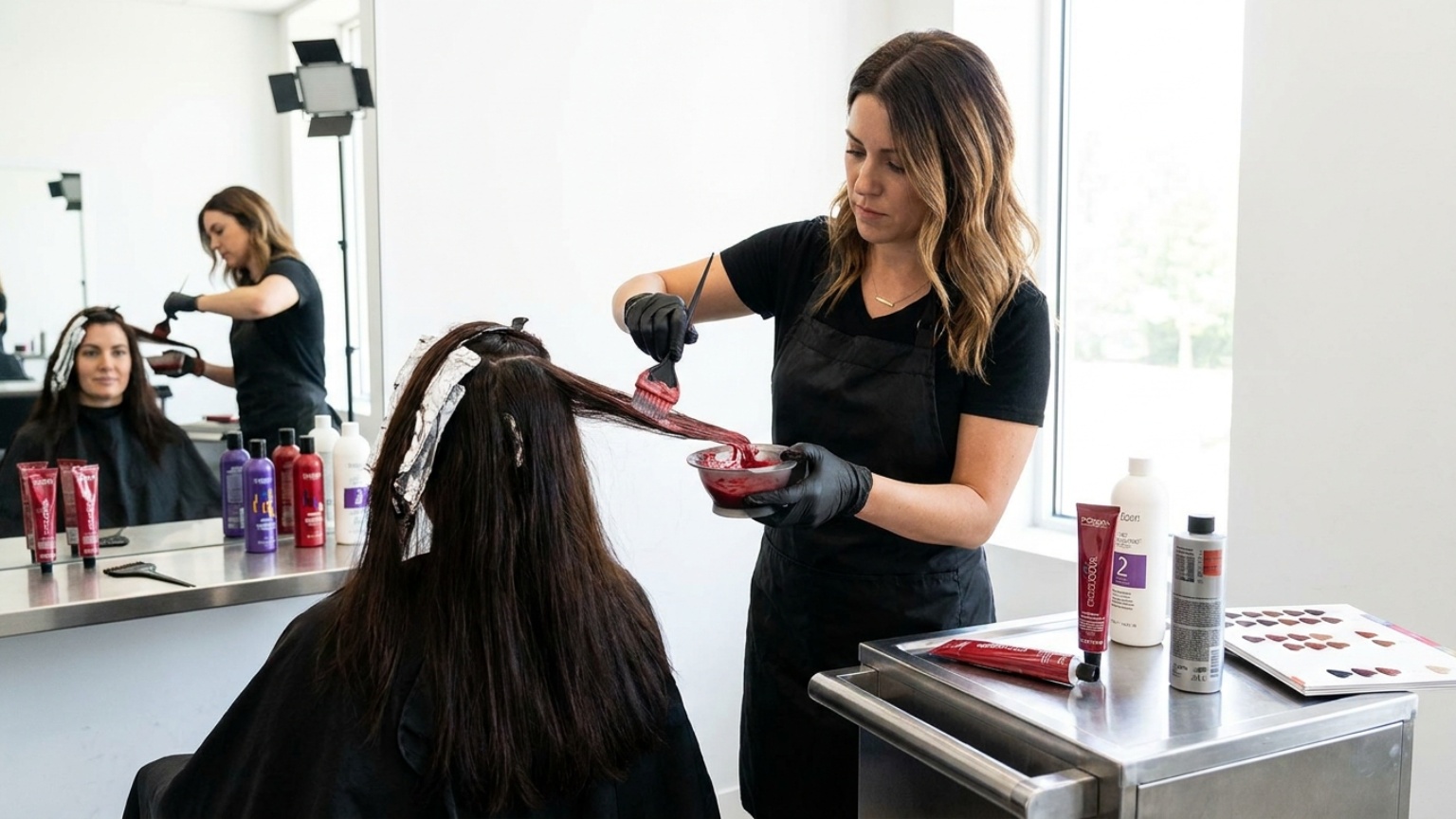
Many individuals face challenges when considering a change in their hair color. The vast array of options and application methods can often lead to confusion or unsatisfactory results. Understanding the science behind hair coloring helps in making informed decisions about personal style and hair health.
1. What is the process of hair color and its different types?
- Temporary Hair Color: This type coats the outer layer of the hair shaft. It does not penetrate the cuticle and washes out easily with one shampoo, similar to using a colored hairspray for a costume.
- Semi-Permanent Hair Color: This color lasts longer than temporary options but still fades over several washes. It penetrates the outer layer of the hair without using a developer, adding a subtle tint that gradually disappears.
- Demi-Permanent Hair Color: This option provides more lasting color than semi-permanent types and uses a low-volume developer. It is effective for blending gray hair or refreshing an existing color without a harsh grow-out line.
- Permanent Hair Color: This color type deeply penetrates the hair shaft, chemically changing its internal structure. It requires a developer to open the cuticle and deposit new pigment, lasting until the hair grows out.
- Bleaching or Lightening: This process removes the natural pigment from the hair through oxidation. It is often a necessary step to achieve significantly lighter shades or vibrant fashion colors.
2. Why is understanding hair color chemistry important for lasting results?
Understanding hair color chemistry is essential for achieving predictable and lasting results. This knowledge ensures the color processes work correctly with the hair’s natural structure. Without a grasp of these chemical interactions, outcomes can be inconsistent, leading to unwanted tones or damage unwanted tones damage.
- Hair Structure: The hair’s natural structure, including its porosity and cuticle health, directly affects how color absorbs. Healthy cuticles allow for even color uptake, while damaged hair may absorb color unevenly, leading to patchy results.
- Pigment Interaction: Artificial color pigments interact with the hair’s natural melanin. Knowing how these pigments combine helps a specialist create desired shades and avoid unexpected color shifts, for example, a green tint when applying ash tones to yellow hair.
- Developer Strength: The strength of the developer, often hydrogen peroxide, controls the lifting of natural pigment and the deposit of artificial color. Using the correct developer strength is crucial; too strong a developer can cause excessive damage, while too weak a developer might not achieve the desired lightness.
- Color Wheel Principles: The color wheel guides the neutralization of unwanted tones. For instance, a specialist uses a violet toner to counteract yellow brassiness because violet is opposite yellow on the color wheel. This principle prevents undesirable orange or green hues.
- Product Selection: Selecting the appropriate hair color products, including pre-treatments and post-treatments, depends on chemical knowledge. Specific formulas are designed for different hair types and desired effects, ensuring the color holds well and the hair remains healthy.
A deep understanding of hair color chemistry allows for precise application and formulation. This expertise ensures the longevity of the color and maintains the hair’s integrity.
3. How does one choose the right hair color for individual needs?
Choosing the correct hair color involves more than just personal taste. It requires considering several factors to ensure the shade complements an individual’s features and lifestyle. A suitable color enhances natural beauty and brings balance to the overall appearance. Therefore, a thoughtful approach is essential for selecting the best option.
- Skin Tone: The underlying tones in a person’s skin greatly influence which hair colors look best. Cool skin tones often pair well with ash blonde, platinum, or blue-black shades. Warm skin tones usually benefit from golden blonde, honey, or rich auburn colors. For example, someone with a cool skin tone might find that a warm, golden blonde makes their skin appear sallow.
- Natural Hair Color: The existing natural hair color plays a crucial role in how a new shade will appear. Drastic changes from very dark to very light, or vice versa, often require multiple steps and can be more damaging. Working within two or three shades of the natural color typically yields the most natural-looking results.
- Eye Color: Certain hair colors can make eye colors stand out more vibrantly. For instance, red hair shades can enhance green or blue eyes. Brown eyes often look striking with caramel, chocolate, or deep auburn tones.
- Hair Condition: The current health of the hair affects how well it will take and hold color. Damaged or highly porous hair may absorb color unevenly or lose it quickly. In such cases, a specialist might suggest strengthening treatments before any coloring process.
- Lifestyle and Maintenance: Some hair colors demand more frequent touch-ups and specific care products. For example, vibrant reds and very light blondes often fade faster and need more regular salon visits. A person’s daily routine and willingness to commit to maintenance should guide their color choice.
A comprehensive evaluation of these aspects leads to the most satisfying hair color selection. Consulting with a professional hair specialist provides personalized advice and ensures the best possible outcome.
4. What are the essential steps for maintaining hair color vibrancy?
Maintaining hair color vibrancy requires a dedicated approach to hair care. Proper maintenance helps extend the life of the color and keeps the hair looking fresh and healthy.
Neglecting these essential steps can lead to premature fading and a dull appearance. For example, a person who invests in a professional coloring service expects the results to last, so understanding these practices is crucial.
- Use color-safe products: Shampoos and conditioners specifically formulated for colored hair help protect the delicate color pigments. Regular hair products often contain sulfates or harsh detergents that can strip color quickly.
- Wash hair less frequently: Washing the hair too often can cause color molecules to rinse out faster with each wash. Using a dry shampoo between washes can help extend the time between full washes, preserving color.
- Protect hair from heat: High temperatures from styling tools, such as flat irons and curling wands, can degrade hair color pigments. Applying a heat protectant spray creates a necessary barrier against this thermal damage.
- Avoid excessive sun exposure: Ultraviolet (UV) rays from the sun can fade hair color, particularly lighter or red shades. Wearing a hat or using hair products with UV protection helps preserve vibrancy outdoors.
- Schedule regular touch-ups: Consistent salon visits for root touch-ups or gloss treatments maintain a consistent, fresh look. This process prevents noticeable regrowth lines and refreshes the overall tone of the hair.
Consistent effort in these areas greatly improves the longevity of hair color. These practices ensure the hair color remains bright, beautiful, and vibrant for an extended period.